guides
guides
24 Feb 2026 • 10 min read
24 Feb 2026 • 10 min read
Restaurant Technology Strategy for 2026: How to Cut Costs, Simplify Operations and Protect Margin
Restaurant Technology Strategy for 2026: How to Cut Costs, Simplify Operations and Protect Margin
Restaurant Technology Strategy for 2026: How to Cut Costs, Simplify Operations and Protect Margin
Planning restaurant tech for 2026 is about simplifying your stack and protecting margin in a tougher market. This guide shows how to consolidate systems, reduce leakage, replace discounting with digital currency, apply AI where it pays back, and build one connected operation.
Planning restaurant tech for 2026 is about simplifying your stack and protecting margin in a tougher market. This guide shows how to consolidate systems, reduce leakage, replace discounting with digital currency, apply AI where it pays back, and build one connected operation.
Written by

Liven
The ultimate hospo solution
TL;DR: How to Plan Restaurant Technology for 2026
Audit and consolidate your tech stack before adding new tools
Use tech to shape customer experience and behavior - crucial to driving adoption of new channels like direct delivery
Replace blanket discounting with margin-preserving digital loyalty
Automate admin, not hospitality
Use AI where it drives measurable revenue or cost savings
Invest in integrated systems, not bolt-ons which also give you access to data that ends not knowing and helps you make better decisions
Margins aren’t collapsing because operators forgot how to run restaurants. They’re collapsing because the economics have shifted.
Food costs are structurally high. Wage pressure is locked in through Fair Work Adjustments and penalty rates. Third-party delivery continues to take a significant cut out of every transaction. And every format, QSR, premium casual or delivery-first, is fighting for the same customer.
You can’t out-discount that environment. You can’t out-hire it either. The only real variable left is how tightly you run your operation, and how well your technology stack supports it.
That’s what 2026 planning is really about. And this guide breaks it down.
The 2026 Restaurant technology framework
When evaluating tech investments for next year, pressure-test everything through five lenses:
Consolidate: Reduce overlapping systems and subscription creep
Integrate: Connect front-of-house, back-of-house and customer data
Automate: Remove manual admin, not human hospitality
Monetise: Turn loyalty and data into revenue, not discounts
Connect: Create one source of operational truth
If a tool doesn’t hit at least one of these, it’s overhead.
Audit before you add
Most operators run 10-30+ disconnected systems for POS, ordering, loyalty, inventory, and marketing automation. It’s familiar but expensive. Besides, that fragmentation creates:
Tech stack chaos: Multiple subscriptions & monthly bills, integration & commission fees, constant login switching, and data that doesn't talk between systems.
Revenue leakage: Industry analysis shows restaurants lose 20-30% of potential revenue due to fragmented systems that can't cross-sell between business units, and through commissions.
Staff burnout: Teams are pulled away from customer experience, with hours spent on manual reconciliation, duplicate data entry, stock adjustments, promotion tracking across disconnected tools.
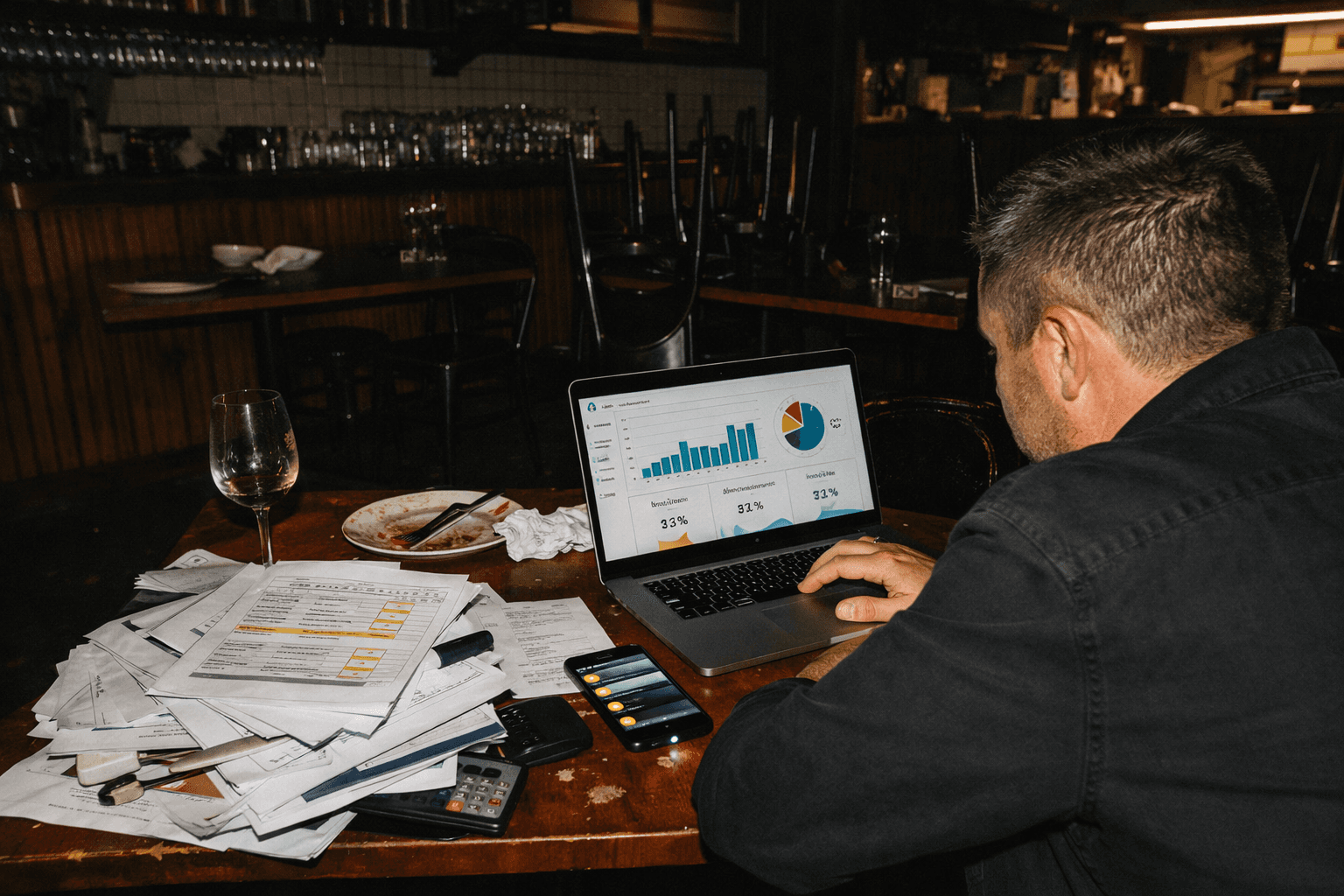
As you map your technology investment for 2026, your first move should be this audit: quantify all subscriptions, integration fees, commission costs, manual hours. Then target consolidation where it counts. Think about multiple tools with a single integrated platform that connects POS, delivery, loyalty, inventory and marketing.
💡Operators using Liven One report up to 75% technology cost reductions while gaining richer data visibility.
💡We can do this audit for you free of charge. Just drop in your details and we'll make it happen
Rebuild around the new customer journey, and not the counter
Planning for 2026 shouldn’t start with “Do we need a new POS?”. The question should be: How do we remove friction from the customer journey and make every touchpoint drive higher AOVs, increased frequency, and loyalty?
Mobile ordering behaviour continues to rise. But customers don’t necessarily want another app download, they want fast access, instant rewards visibility, and frictionless payment. QR ordering and loyalty integration have become baseline expectations.
So when you’re planning for next year, make sure every interaction, dine-in, takeaway, delivery, or catering, runs through a single, unified experience which has loyalty at the front and center.
💡 Restaurants that unified their channels and integrated loyalty directly into ordering via Liven Magic App, lifted average order values by >20% and repeat visits by 250%. Customers simply spend more when they can see their loyalty balance while ordering - and where that balance is in real dollars. Other Magic App users have seen an 8x increase in monthly customer spend from loyalty programs.
Limit discounting
Discounting has become a race to the bottom. A $20 discount costs you $20 in revenue. But there’s another way.
Digital currency models change that equation. Digital currency models (aka Brandollars) loyalty structure where customers earn and redeem dollar-denominated value rather than abstract points, creating transparency and perceived monetary benefit.
Here’s why your custom brandollars beat discounts:
$20 in digital currency = $6 actual cost (Estimated based on cost of goods)
Customers spend 5-10x faster when using earned currency
Locks in spend and creates revenue moats that keep customers coming back
For 2026, rethink “promotions”, make them assets, not discounts.
💡A popular QSR brand saw their digital currency program aka brandollars drive 79% of customers to purchase more currency, directly banking future revenue.
Choose automation that scales people, not replaces them
Hotel technology that automates guest queries can handle 60% of front desk questions within 2 minutes. Restaurants need the same efficiency gains without losing human interaction.
Where Automation Delivers Measurable ROI:
Order taking through QR ordering or Kiosks reduces staff pressure during rush periods
Automated loyalty issuance eliminates manual reward tracking
Integrated POS systems reduce training time across locations
Automatic digital menu syncs and updates across locations & channels
Promos and coupons that apply automatically, with guardrails that prevent misuse
Real-time inventory tracking and digital stocktakes
This frees your team to focus on hospitality instead of administrative tasks.
💡Several major hospo operators save 2-3 hours a day with real-time inventory sync between Liven Abacus and Zeemart
Use AI where it earns its keep
AI adoption in hospitality is maturing. The question is no longer whether to use it, but where it produces measurable return.
Here are some high-ROI AI Use Cases in Restaurants:
Customer segmentation: automatically identify high-value, at-risk, and first-time guests based on real behaviour
AI-powered recommendations: dynamically upsell products or categories that match the customer’s taste or buying behaviour
Automated marketing: send personalised campaigns triggered by purchase patterns, not generic blasts
Invoice digitisation and reconciliation: Venues save hours on
Data insights: AI can highlight top performers, weak spots, and upcoming trends so you can act faster
AI voice and call handling: capture inbound orders and bookings automatically, build carts in real time, reflect live menu availability, and reduce missed-call revenue leakage during peak periods.
💡Liven offers features like Smart item recommendations in online ordering; data insights on Zeemart; automated churn, earn and burn reports on Liven Insights and an AI Voice Ordering platform to help you drive up AOV, save costs and retain customers using AI
Innovate for Connection, Not Complexity
The biggest competitive advantage in 2026 will come from how seamlessly your business connects, not how much software you have.
The restaurant of the future runs on one intelligent connected ecosystem that connects front of house, back of house, and guest data. Every sale, order, and feedback loop feeds into a single source of truth. Connected ecosystems allow:
Faster decision-making
Cleaner reporting
Reduced supplier leakage
More consistent margin control
Where to focus your connection strategy
Unified data: sales, labour, inventory, and marketing all sharing data and reporting in real-time
Front + Back of House integration: shared insights between floor staff and kitchen improve flow and reduce waste
Smart inventory: live inventory sync with POS and supplier cost tracking
Operational clarity: every team works from the same numbers, one truth, no confusion
💡 The end-to-end visibility from procurement to sales helped multi-venue groups using Liven’s connected ecosystem cut revenue leakages and supplier costs 20%
The 10-Point Checklist Before You Sign Anything
Before you commit to budget or renew any contracts for 2026, pressure-test every dollar.
Ask yourself:
Will this make our operation simpler, not more complex?
Can I offset the cost of improving my hardware and software and potentially pay nothing for it?
Can it help us consolidate or eliminate other tools or processes?
Does it give us clarity with one accurate, shared view of performance?
Will it improve collaboration between the front and back of house, not create new silos?
Does it enhance customer experience in a way that’s visible and measurable?
Will it reduce friction for staff and guests alike?
Can it adapt as we grow or change, rather than locking us into rigid systems?
Does it pay back through efficiency, margin protection, or loyalty gains?
Have we stress-tested the spend against 2026’s likely cost pressures and wage shifts?
If it doesn’t simplify, connect, or compound your results it’s just an added expense.
Talk to an Expert
If you’re building next year’s budget and want to see how leading operators are cutting costs, consolidating systems, and driving new revenue from the same tech spend, our team can help.
Book a 30-minute innovation and budgeting session with Liven to map out your 2026 investment plan with real ROI benchmarks.
Frequently Asked Questions
What restaurant technology should operators prioritise in 2026?
Integrated POS and loyalty, automation that reduces admin labour, and AI tools tied directly to transaction data and margin protection.
How can restaurants reduce technology costs?
Audit subscriptions, remove redundant systems, consolidate vendors, and reduce commission-heavy third-party ordering where possible.
Is digital loyalty better than discounting?
Yes, when structured properly. Digital currency preserves margin by controlling incentive cost while increasing repeat frequency and lifetime value.
Does AI really work in hospitality?
Yes, in segmentation, dynamic upselling, automated marketing triggers and online ordering, invoice reconciliation and margin analytics. Not as a novelty chatbot.
Should restaurants consolidate their tech stack?
In most cases, yes. Consolidation reduces cost duplication, integration friction and data silos, improving operational clarity.
TL;DR: How to Plan Restaurant Technology for 2026
Audit and consolidate your tech stack before adding new tools
Use tech to shape customer experience and behavior - crucial to driving adoption of new channels like direct delivery
Replace blanket discounting with margin-preserving digital loyalty
Automate admin, not hospitality
Use AI where it drives measurable revenue or cost savings
Invest in integrated systems, not bolt-ons which also give you access to data that ends not knowing and helps you make better decisions
Margins aren’t collapsing because operators forgot how to run restaurants. They’re collapsing because the economics have shifted.
Food costs are structurally high. Wage pressure is locked in through Fair Work Adjustments and penalty rates. Third-party delivery continues to take a significant cut out of every transaction. And every format, QSR, premium casual or delivery-first, is fighting for the same customer.
You can’t out-discount that environment. You can’t out-hire it either. The only real variable left is how tightly you run your operation, and how well your technology stack supports it.
That’s what 2026 planning is really about. And this guide breaks it down.
The 2026 Restaurant technology framework
When evaluating tech investments for next year, pressure-test everything through five lenses:
Consolidate: Reduce overlapping systems and subscription creep
Integrate: Connect front-of-house, back-of-house and customer data
Automate: Remove manual admin, not human hospitality
Monetise: Turn loyalty and data into revenue, not discounts
Connect: Create one source of operational truth
If a tool doesn’t hit at least one of these, it’s overhead.
Audit before you add
Most operators run 10-30+ disconnected systems for POS, ordering, loyalty, inventory, and marketing automation. It’s familiar but expensive. Besides, that fragmentation creates:
Tech stack chaos: Multiple subscriptions & monthly bills, integration & commission fees, constant login switching, and data that doesn't talk between systems.
Revenue leakage: Industry analysis shows restaurants lose 20-30% of potential revenue due to fragmented systems that can't cross-sell between business units, and through commissions.
Staff burnout: Teams are pulled away from customer experience, with hours spent on manual reconciliation, duplicate data entry, stock adjustments, promotion tracking across disconnected tools.
As you map your technology investment for 2026, your first move should be this audit: quantify all subscriptions, integration fees, commission costs, manual hours. Then target consolidation where it counts. Think about multiple tools with a single integrated platform that connects POS, delivery, loyalty, inventory and marketing.
💡Operators using Liven One report up to 75% technology cost reductions while gaining richer data visibility.
💡We can do this audit for you free of charge. Just drop in your details and we'll make it happen
Rebuild around the new customer journey, and not the counter
Planning for 2026 shouldn’t start with “Do we need a new POS?”. The question should be: How do we remove friction from the customer journey and make every touchpoint drive higher AOVs, increased frequency, and loyalty?
Mobile ordering behaviour continues to rise. But customers don’t necessarily want another app download, they want fast access, instant rewards visibility, and frictionless payment. QR ordering and loyalty integration have become baseline expectations.
So when you’re planning for next year, make sure every interaction, dine-in, takeaway, delivery, or catering, runs through a single, unified experience which has loyalty at the front and center.
💡 Restaurants that unified their channels and integrated loyalty directly into ordering via Liven Magic App, lifted average order values by >20% and repeat visits by 250%. Customers simply spend more when they can see their loyalty balance while ordering - and where that balance is in real dollars. Other Magic App users have seen an 8x increase in monthly customer spend from loyalty programs.
Limit discounting
Discounting has become a race to the bottom. A $20 discount costs you $20 in revenue. But there’s another way.
Digital currency models change that equation. Digital currency models (aka Brandollars) loyalty structure where customers earn and redeem dollar-denominated value rather than abstract points, creating transparency and perceived monetary benefit.
Here’s why your custom brandollars beat discounts:
$20 in digital currency = $6 actual cost (Estimated based on cost of goods)
Customers spend 5-10x faster when using earned currency
Locks in spend and creates revenue moats that keep customers coming back
For 2026, rethink “promotions”, make them assets, not discounts.
💡A popular QSR brand saw their digital currency program aka brandollars drive 79% of customers to purchase more currency, directly banking future revenue.
Choose automation that scales people, not replaces them
Hotel technology that automates guest queries can handle 60% of front desk questions within 2 minutes. Restaurants need the same efficiency gains without losing human interaction.
Where Automation Delivers Measurable ROI:
Order taking through QR ordering or Kiosks reduces staff pressure during rush periods
Automated loyalty issuance eliminates manual reward tracking
Integrated POS systems reduce training time across locations
Automatic digital menu syncs and updates across locations & channels
Promos and coupons that apply automatically, with guardrails that prevent misuse
Real-time inventory tracking and digital stocktakes
This frees your team to focus on hospitality instead of administrative tasks.
💡Several major hospo operators save 2-3 hours a day with real-time inventory sync between Liven Abacus and Zeemart
Use AI where it earns its keep
AI adoption in hospitality is maturing. The question is no longer whether to use it, but where it produces measurable return.
Here are some high-ROI AI Use Cases in Restaurants:
Customer segmentation: automatically identify high-value, at-risk, and first-time guests based on real behaviour
AI-powered recommendations: dynamically upsell products or categories that match the customer’s taste or buying behaviour
Automated marketing: send personalised campaigns triggered by purchase patterns, not generic blasts
Invoice digitisation and reconciliation: Venues save hours on
Data insights: AI can highlight top performers, weak spots, and upcoming trends so you can act faster
AI voice and call handling: capture inbound orders and bookings automatically, build carts in real time, reflect live menu availability, and reduce missed-call revenue leakage during peak periods.
💡Liven offers features like Smart item recommendations in online ordering; data insights on Zeemart; automated churn, earn and burn reports on Liven Insights and an AI Voice Ordering platform to help you drive up AOV, save costs and retain customers using AI
Innovate for Connection, Not Complexity
The biggest competitive advantage in 2026 will come from how seamlessly your business connects, not how much software you have.
The restaurant of the future runs on one intelligent connected ecosystem that connects front of house, back of house, and guest data. Every sale, order, and feedback loop feeds into a single source of truth. Connected ecosystems allow:
Faster decision-making
Cleaner reporting
Reduced supplier leakage
More consistent margin control
Where to focus your connection strategy
Unified data: sales, labour, inventory, and marketing all sharing data and reporting in real-time
Front + Back of House integration: shared insights between floor staff and kitchen improve flow and reduce waste
Smart inventory: live inventory sync with POS and supplier cost tracking
Operational clarity: every team works from the same numbers, one truth, no confusion
💡 The end-to-end visibility from procurement to sales helped multi-venue groups using Liven’s connected ecosystem cut revenue leakages and supplier costs 20%
The 10-Point Checklist Before You Sign Anything
Before you commit to budget or renew any contracts for 2026, pressure-test every dollar.
Ask yourself:
Will this make our operation simpler, not more complex?
Can I offset the cost of improving my hardware and software and potentially pay nothing for it?
Can it help us consolidate or eliminate other tools or processes?
Does it give us clarity with one accurate, shared view of performance?
Will it improve collaboration between the front and back of house, not create new silos?
Does it enhance customer experience in a way that’s visible and measurable?
Will it reduce friction for staff and guests alike?
Can it adapt as we grow or change, rather than locking us into rigid systems?
Does it pay back through efficiency, margin protection, or loyalty gains?
Have we stress-tested the spend against 2026’s likely cost pressures and wage shifts?
If it doesn’t simplify, connect, or compound your results it’s just an added expense.
Talk to an Expert
If you’re building next year’s budget and want to see how leading operators are cutting costs, consolidating systems, and driving new revenue from the same tech spend, our team can help.
Book a 30-minute innovation and budgeting session with Liven to map out your 2026 investment plan with real ROI benchmarks.
Frequently Asked Questions
What restaurant technology should operators prioritise in 2026?
Integrated POS and loyalty, automation that reduces admin labour, and AI tools tied directly to transaction data and margin protection.
How can restaurants reduce technology costs?
Audit subscriptions, remove redundant systems, consolidate vendors, and reduce commission-heavy third-party ordering where possible.
Is digital loyalty better than discounting?
Yes, when structured properly. Digital currency preserves margin by controlling incentive cost while increasing repeat frequency and lifetime value.
Does AI really work in hospitality?
Yes, in segmentation, dynamic upselling, automated marketing triggers and online ordering, invoice reconciliation and margin analytics. Not as a novelty chatbot.
Should restaurants consolidate their tech stack?
In most cases, yes. Consolidation reduces cost duplication, integration friction and data silos, improving operational clarity.
Liven is the first complete hospitality system that works for you. Loved by over 7,000 venues across Asia Pacific and used by tens of millions of diners and operators annually. To see how Liven can work for you, visit liven.love
Liven is the first complete hospitality system that works for you. Loved by over 7,000 venues across Asia Pacific and used by tens of millions of diners and operators annually. To see how Liven can work for you, visit liven.love
Share this post
Share this post
You might also like
You might also like
You might also like
Browse by category
Browse by category
End not knowing!
Get industry insights, guides, best practices from the best operators, sneak previews of new technology, and more!
End not knowing!
Get industry insights, guides, best practices from the best operators, sneak previews of new technology, and more!
End not knowing!
Get industry insights, guides, best practices from the best operators, sneak previews of new technology, and more!